




Metal Building Insulation: Fiberglass Blanket vs. Liner System
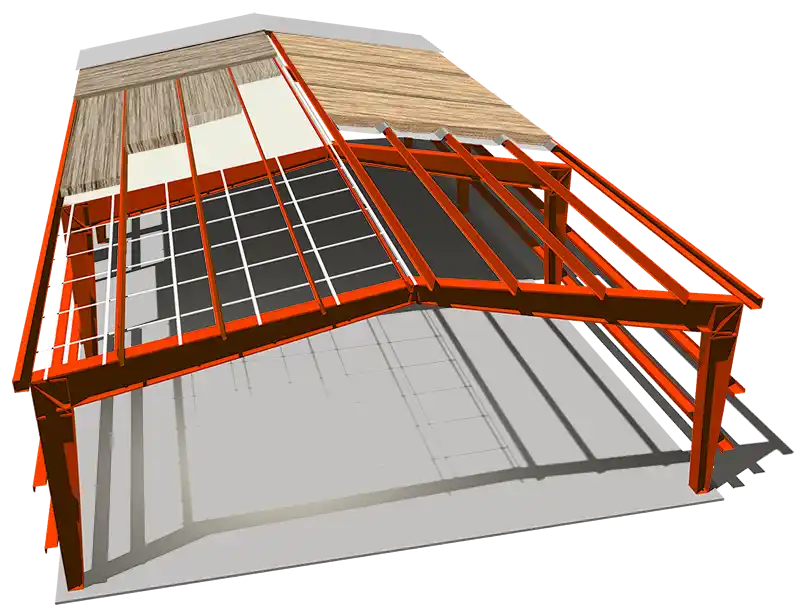
Metal Building Insulation: Fiberglass Blanket vs. Liner System Fiberglass
Quick answer: The two most common ways to insulate a steel building are fiberglass blanket insulation (faced rolls laid over the framing before the panels go on) and liner system fiberglass insulation (faced fiberglass suspended in the wall and roof cavity over banding or a fabric liner). Blanket insulation is the most affordable option and works well for basic temperature and condensation control. A liner system holds more insulation without compressing it, delivers higher installed R-values, controls condensation better, and leaves a clean, finished white interior. For a building you plan to heat or cool — a 40x60 metal building used as a workshop, gym, or office, for example — a liner system is usually the better long-term value.
Insulation is one of the few decisions on a steel building you cannot easily change later, so it is worth understanding the options before you order. This guide breaks down how fiberglass blanket and liner systems differ, what R-value you actually need, and the questions buyers ask us most often.
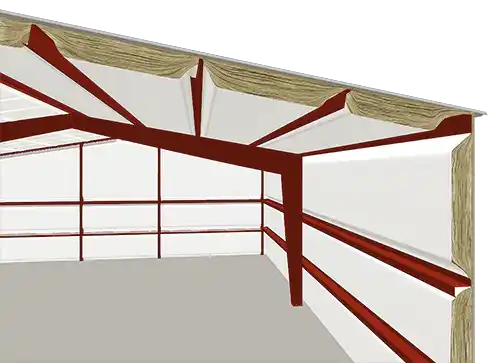
Faced Fiberglass Blanket
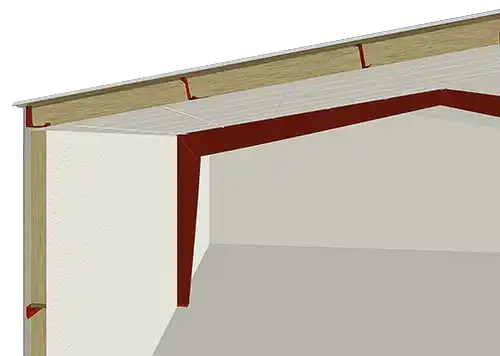
Liner System Fiberglass
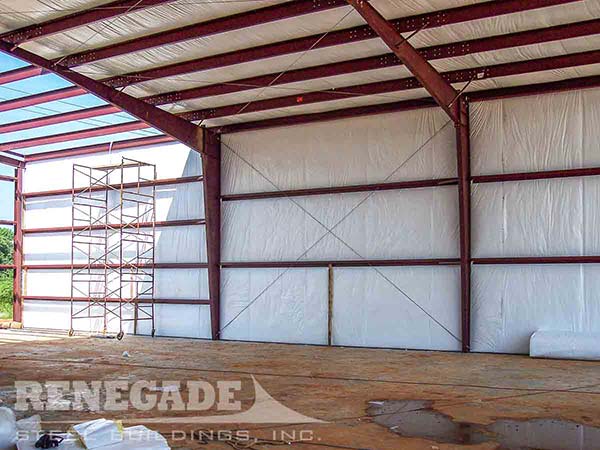
Why metal buildings need insulation
A steel building without insulation does two things you don't want: it swings hard with the outdoor temperature, and it sweats. Because steel is a strong thermal conductor, an uninsulated metal roof or wall transfers heat straight through. In summer the interior bakes; in winter it dumps heat as fast as your system can produce it.
The bigger issue for most owners is condensation. When warm, moist interior air meets a cold steel panel, water forms on the underside of the roof and walls, the same way a cold drink sweats on a humid day. Over time that moisture drips on equipment, rusts fasteners, and feeds mold. Proper insulation with a vapor-retarder facing keeps the steel surface warmer than the dew point and stops the sweating before it starts.
Good insulation delivers four things at once: lower heating and cooling bills, condensation and moisture control, sound dampening (rain on a bare metal roof is loud), and a more comfortable, usable interior year-round.
Fiberglass blanket insulation
Fiberglass blanket insulation is faced fiberglass supplied in long rolls that are draped over the purlins and girts and pinned in place as the roof and wall panels are installed. It is the standard, most economical insulation method for pre-engineered steel buildings and is what most people picture when they think of an insulated metal building.
The fiberglass core is laminated to a facing,most often a white vinyl vapor retarder (commonly specified as WMP-VR or similar), that forms the visible interior surface and blocks moisture migration. Facings are also available in foil and reinforced poly depending on the look and performance you want. The facing that we most commonly use is reinforced vinyl that also has a reflective foil on the laminate side to create a radiant barrier and increase it's thermal barrier properties.
Common blanket thicknesses and their nominal (out-of-package) R-values:
Thickness
Nominal R-Value
3"
R-10
4"
R-13
6"
R-19
8"
R-25
10"
R-30
Strengths: lowest upfront cost, simple to install during erection, controls basic condensation, and available in a wide range of thicknesses.
The trade-off to understand: single-layer blanket gets compressed where it passes between the steel panel and the purlin or girt. A 6" R-19 blanket squeezed down to an inch at every framing line loses a share of its rated value at those points, and the steel framing itself bridges heat through. The R-value on the label is the un-compressed number, not always what you get installed across the whole assembly. For unconditioned storage and basic shelter, that's perfectly acceptable. For a space you'll heat and cool, it's the reason many buyers step up to a liner system.
Liner system fiberglass insulation
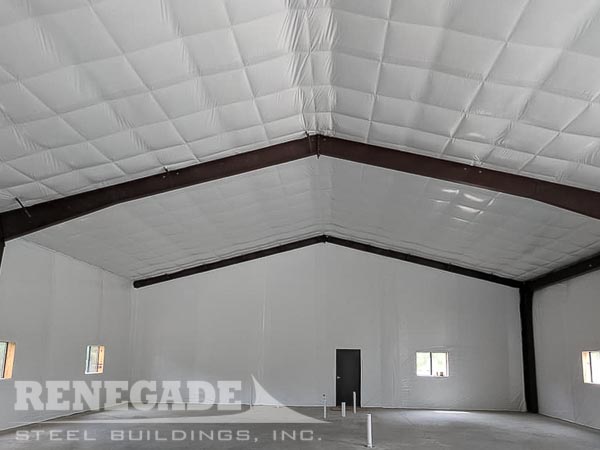
A liner system suspends faced fiberglass insulation in the full depth of the wall and roof cavity by running banding and a continuous fabric liner beneath the framing, so the insulation sits at full thickness without being crushed at the purlins. Because the insulation isn't compressed and the cavity can hold more of it, liner systems reach higher installed R-values and give a clean, uniform finished interior.
Here's why it performs better. By holding the insulation off the framing line, a liner system preserves close to the full rated R-value across the whole assembly and cuts the thermal bridging you get when fiberglass is pinched against bare steel. It also lets you stack layers. A common double layer build is one layer between the framing and a second continuous layer beneath it (often run perpendicular), which pushes the unfaced insulation assembly into the R-30 to R-49 range that conditioned spaces benefit from.
Two main approaches exist:
- Banded liner systems use high-strength banding or steel straps tensioned across the framing to carry the insulation, with a faced liner forming the interior surface.
- Wall liner systems utilize hangers to support the fiberglass while bands and liner create a vapor barrier and nice finished look.
Strengths: higher and more reliable installed R-value, noticeably better condensation and moisture control thanks to the continuous vapor-retarder liner, superior sound dampening, and a finished, professional white interior that reflects light and brightens the building.
The trade-off: higher material and labor cost than single-layer blanket, and more installation time. For conditioned buildings, that cost is usually recovered through lower energy bills and a far more comfortable space.
Fiberglass blanket vs. liner system: side-by-side
Factor
Fiberglass blanket
Liner system fiberglass
Upfront cost
Lowest
Higher
Typical installed R-value
R-10 to R-19
R25 to R49
R-value rentention
Reduced at framing (compression)
Full thickness preserved
Condensation control
Good
Excellent
Interior finish
Faced, visible framing
Clean, finished with liner
Sound dampening
Moderate
Moderate to high
Best for
Storage, basic shelter, budget builds
Shops, gyms, office, anything heated or cooled
How much R-value do you actually need?
R-value measures resistance to heat flow. The higher the number, the better the insulation slows heat transfer. The right target depends on your climate zone, how you'll use the building, and any local energy code requirements.
- Unheated storage or a barn: R-10 to R-13 is often enough to control condensation and take the edge off temperature swings.
- A workshop or garage you'll heat occasionally: R-13 to R-19 in the walls, with more in the roof, is a sensible baseline.
- A fully conditioned space such as an office, gym, living area, or climate-controlled shop: plan for roughly R-19 or higher in the walls and R-30 to R-49 in the roof, which generally calls for a liner system or a double-layer build.
Roofs always warrant more insulation than walls because heat rises and the roof takes the brunt of solar gain. Local energy codes set minimums for occupied buildings, so confirm your requirements before finalizing. When you're unsure, it almost always pays to insulate slightly above the minimum during new construction as adding insulation after the building is up is expensive and disruptive.
In cases where energy code requirements dictate specific values for the thermal performance of the overall building envelope, you may be required to utilize the higher R-value insulation systems in order to meet or exceed the minimum R-value for your metal structure.
No matter which system you use, most building owners benefit from the energy efficiency that insulation products provide as well as the added benefit of reduced condensation issues.
Frequently asked questions
Choosing the right insulation for your building
The decision comes down to how you'll use the space. If you're putting up unconditioned storage or a basic shelter on a budget, single-layer fiberglass blanket controls condensation and keeps costs down. If you're building a shop, gym, office, or anything you'll heat and cool, a liner system's higher R-value, better moisture control, and finished interior make it the stronger long-term investment.
At Renegade Steel Buildings, we'll help you match the insulation package to your climate, your intended use, and your local energy code so your building is comfortable, dry, and efficient from day one. Reach out for a quote and we'll walk you through the options for your specific building.
Get your Quick Quote