
Your Steel Building Specialist



Pole Barn vs Metal Building
Pole Barn vs Metal Building: Which Is Right for Your Project?
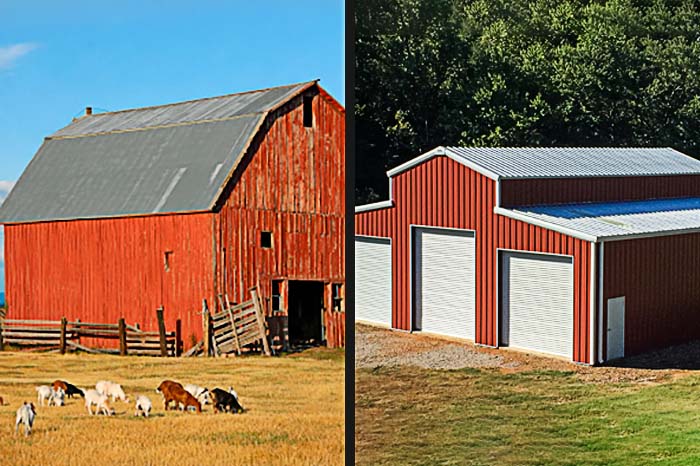
At a Glance: Pole barns offer lower upfront costs and faster construction timelines. Metal buildings deliver greater strength, longer lifespans, and far less maintenance over time. Both serve legitimate purposes, but the right choice depends on your budget and long-term use plans.
Factor
Pole Barn
Metal Building
Structure
Wood posts
I-beam Steel Frame
Upfront Cost
Lower
Moderate to higher
Lifespan
Decades with maintenance
Long-Term with minimal upkeep
Maintenance
Regular upkeep required
Minimal
Durability
Moderate
High
Design Flexibility
Varies
Clear span available
Construction Speed
Moderate
Fast
Construction waste
Moderate to high
Minimal
What is a Pole Barn
A pole barn is a post-frame building that uses large wooden posts as its primary structural support. The wood posts are set directly into the ground or anchored into concrete footings around the perimeter of the structure.
Because the wooden poles carry the load, a traditional pole barn does not require a full concrete foundation. That makes pole barn construction faster and somewhat cheaper to start. Roof trusses span between the posts and tie the frame together overhead.
Pole barns became widely popular in agricultural settings because of their low material cost and simple construction process. Farmers and landowners could put up a functional structure quickly without a large upfront investment.
Key Features of Pole Barns
- Wood framing system using wooden poles as primary supports
- Minimal foundation requirement
- Short build time compared to engineered alternatives
What Is a Metal Building?
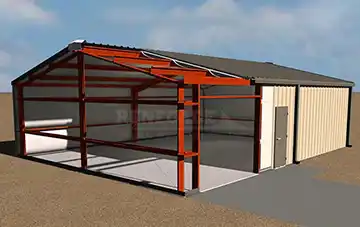
A metal building is a pre-engineered metal building system manufactured from steel components and delivered as a complete kit. The steel frame consists of red iron I-beams for the columns and rafters, with secondary steel framing members running between them.
A pre-engineered metal building typically requires an engineered concrete foundation or slab with footers and piers. The steel columns are anchor-bolted to the foundation, creating a stable base that supports the entire structure.
Metal buildings are used across a wide range of applications, including commercial warehouses, industrial facilities, retail spaces, residential garages, workshops, and agricultural barns. Every component is calculated to meet local wind, snow load, and seismic requirements before
Key Features of Metal Buildings
- Red iron steel frame with engineered I-beam columns and rafters
- Precision-manufactured components built to local code specifications
- Clear span interior design available with no interior support posts required
- High customization across size, roof pitch, color, doors, and insulation
- Quick assembly
Pole Barn

- Lower upfront cost for basic builds
- Wood posts vulnerable to rot and pests
- Requires ongoing maintenance and treatment
- Limited lifespan in harsh weather conditions
Metal Building
- A little more upfront cost with long-term value
- Steel frame resists to rot, pests and moisture
- Minimal maintenance over building lifespan
- Engineered for strength and weather resistance
- Clear span interiors with no support posts

Key Differences Between Pole Barns and Metal Buildings
The most obvious difference between these two building types is the construction material. Wood posts versus a steel frame is just the starting point. The differences extend to performance, longevity, and total cost of ownership.
Structural and Performance Differences
A wooden pole barn relies on pressure-treated wood posts to carry the building's load. Wood is a natural material with natural vulnerabilities. Over time, wood posts are susceptible to rot, insect damage, moisture absorption, and warping. These problems become more pronounced in harsh weather conditions.
A metal building uses steel framing engineered for specific load requirements. Steel columns do not rot, warp, or attract pests. The steel barn frame maintains its structural integrity across decades of exposure to extreme weather conditions. Fire resistance is another significant advantage. Steel construction does not fuel a fire the way a wooden structure does. For anyone researching a metal barn for a farm or commercial site, that difference matters to both safety planning and insurance company requirements.
Cost Comparison: Upfront vs Long-Term Value
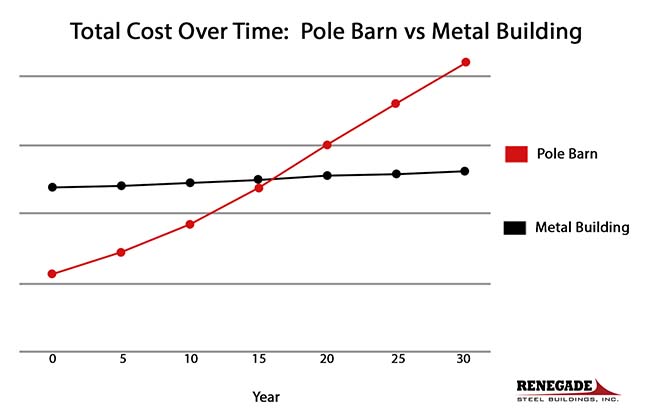
Pole barn construction typically carries lower upfront costs. Wood posts and basic framing materials are less expensive than engineered steel components, and labor costs tend to be lower because the construction process is simple.
A pre-engineered metal building often costs more upfront depending on design, size, and site conditions. That gap tells only part of the story.
Upfront vs Long-Term Costs
Wood structures require ongoing investment. Exterior walls may need repainting or treatment on a recurring schedule. Wooden posts can rot at the base and require replacement. Pest control becomes a recurring expense.
Steel buildings carry minimal maintenance costs over time. There is no rot to address, no insect damage to treat, and no warping to correct. Cheaper upfront does not mean cheaper long-term. Over several decades, a metal building often proves to be the more cost-effective choice.
Durability and Lifespan
Wood structures face constant environmental pressure. Moisture causes rot. Termites and other insects target wooden posts and roof trusses. Heavy snow loads stress wood framing in ways that accumulate over time.
Steel construction resists all of those threats. Metal panels shed moisture rather than absorbing it. Steel framing is not a food source for insects. Pre-engineered metal buildings are designed with local snow load and wind requirements built into the engineering.
Lifespan Comparison
- Pole barns can last for decades when properly maintained, though wood is vulnerable to climate, pests, and moisture over time
- Metal buildings often outlast wood structures when properly maintained, with steel resisting the wear that breaks down post-frame buildings
- Maintenance habits directly affect how long either structure performs
Maintenance Requirements
Maintenance is one of the clearest practical differences between a pole barn and a metal building.
Pole barn upkeep typically includes:
- Inspecting and treating wood posts for rot and moisture damage
- Pest control and termite prevention
- Repainting or re-sealing exterior walls on a recurring schedule
- Repairing roof trusses after heavy snow or wind events
Metal building maintenance is far more straightforward:
- Periodic visual inspections of metal panels and fasteners
- No rot, no insect damage, and no warping to address
- Clean Gutters (if applicable)
- Less maintenance over the full life of the building
Maintenance costs are a major long-term cost driver. That reality favors steel construction for anyone planning to own their building for the long haul.
Design Flexibility and Use Cases
Older pole barn designs often relied on interior posts to support the roof structure. Modern post-frame construction has evolved, and many pole barn systems can now achieve clear-span interiors without interior columns. That said, design flexibility still varies widely depending on the system and the builder.
Pre-engineered metal buildings are purpose-built for clear span construction. Wide-open floor plans are a standard feature, not an add-on. Many metal buildings can also be designed for future expansion, though that depends on the original design and foundation planning.
Common use cases by building type:
- Pole barn: agricultural storage, equipment sheds, hay barns, basic farm buildings
- Metal building: garages, workshops, commercial spaces, industrial facilities, agricultural steel barns
Which One Should You Choose?
A pole barn may be the better fit if:
- Your budget is limited upfront
- You need a straightforward agricultural storage solution quickly
- The structure has a shorter planned use period
- You are in a region with a mild climate and lower weather exposure
A metal building is the stronger choice if:
- You want a structure built to handle extreme weather conditions
- You need a clear span interior space for a garage, shop, or commercial use
- You want less maintenance and lower long-term costs
- You are planning a permanent structure designed to last
For most projects where performance and permanence matter, a pre-engineered metal building delivers stronger long-term value.
Build Stronger with Renegade Steel Buildings
Renegade Steel Buildings has been supplying American-made pre-engineered steel building kits since 2010. Every building uses red iron I-beam steel construction, 26-gauge PBR metal panels, and engineered stamped drawings designed to meet local wind, snow load, and seismic codes.
Renegade focuses exclusively on pre-engineered red iron steel buildings. No pole barn kits, no tube structures, no quonset huts. Just one building type built to perform for the long term. Check out the Renegade 3D Building Designer to visualize your build.
Explore some of Renegade building options:
Request a free quote today and get a clear, honest breakdown of exactly what your building will include and what it will cost.
Get your Quick Quote